Rooms with a Story: Beds Fit for a King
20 February 2026
These historic havens aren’t just places to lay your head
They’re portals into past lives. From exiled kings to scandalous socialites, their previous inhabitants could tell a very different kind of tale at turndown. You check into some hotel rooms for the view. Others for the elegant décor, the high-thread-count sheets or the fact that they have direct access to glorious gardens. And then there are the rooms that come with stories passed down over the centuries, the kind that tug you back through time the moment you turn the key.
These rooms all come with a past – grand, ghostly or just gently eccentric – where the wallpaper could probably write its own memoir. They might be places where royalty once slept (probably less well than you will), or where historic heavyweights paused for a while. From grand chambers redolent with Tudor tales to baroque boudoirs, these rooms do more than just host you. They let you play a brief part in a much bigger tale.
At Hartwell House in Buckinghamshire, for instance, the story is one of the French court in exile – Louis XVIII of France lived here with his court from 1809 to 1814. During the summer, he slept in what is now The King’s Room, with its regal blues and golds, four-poster bed, and a bust in his image. While Louis found it a tad too draughty in winter and decamped to what is now part of the Soane Dining Room, there’s no need to worry about staying there these days – central heating has made it much cosier.
Louis got his fairytale ending, singing his accession papers in Hartwell’s elegant library before returning to reclaim his crown. His queen, Marie Josephine, wasn’t so lucky. Her quarters, which you can also book, are now all floral fabrics and sunny window seats overlooking Capability Brown’s grounds. But back then she was unhappy, felt isolated, and dreaded the grand staircase, where carved figures cast strange shadows at night. Ironically, her portrait now hangs there, next to Louis’s. She died before Louis’ triumphant return to France.
Another queen, another tragic ending. Lady Jane Grey is thought to have lived as a girl at Boringdon Hall in Devon – back when it was still Boringdon Manor and her father, the Duke of Suffolk, had just snapped it up. That was 1549, four years before Jane’s nine-day wonder on the throne followed by her execution.
The suite named after her is a gentler affair, with three floors of soft pastels and exposed stone, its contemporary décor giving a Tudor-meets-boutique feel. At the top of the turret, a bathroom with a freestanding tub and views over the Devon hills is the perfect place to – quite literally – soak up the Tudor history.
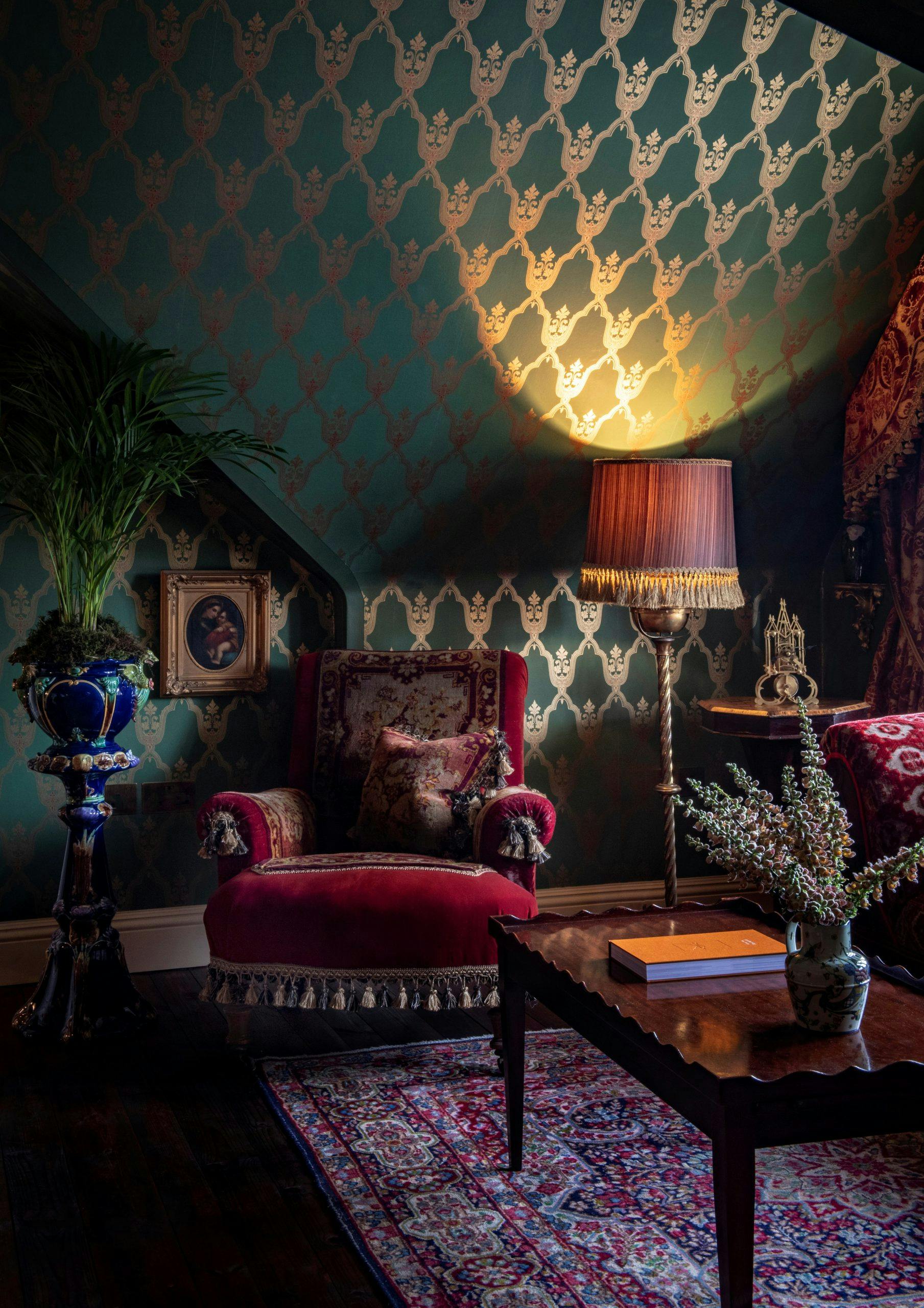
Fast forward to the Victorian era, and Scotland had become one of the places where the royals hung out. Cue The Fife Arms, a coaching inn in Braemar that pretty much became the unofficial extension of Balmoral. Victoria and Albert reportedly adored the place; a delicate watercolour of a stag’s head by the queen herself is one of 15,000 artworks in the hotel’s vast collection. The royal suites are as flamboyant as you’d expect: wall-to-wall Victoriana and chintz. The Queen Victoria suite gets top billing, naturally, with its grandly carved bed. Or try the Princess Royal Louise suite, named after Victoria’s granddaughter, where you can sink into a rolltop bath beneath a portrait of the princess herself, quietly watching over your soak like it’s 1897 and you’re late for afternoon tea.
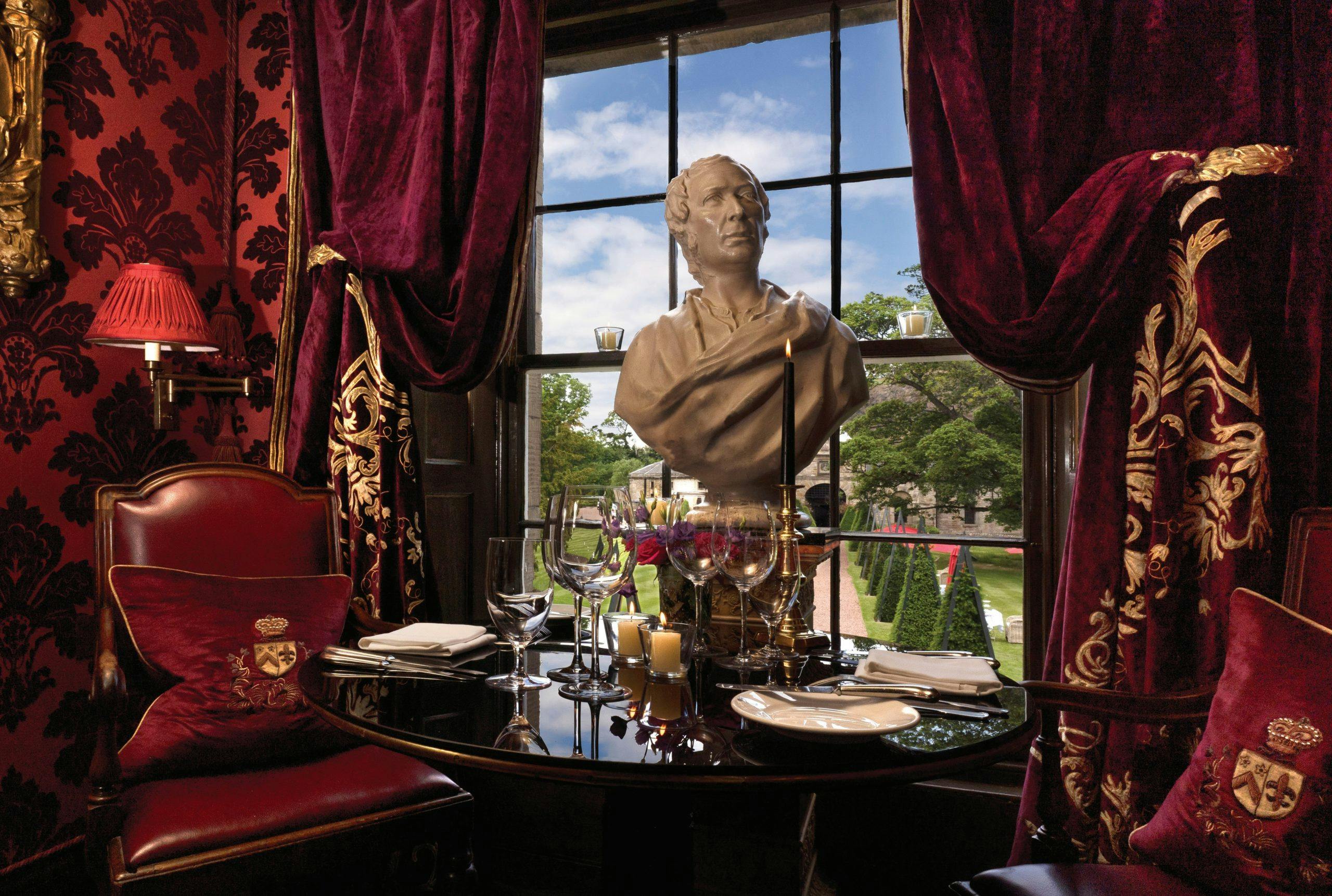
Another hotel north of the border that doesn’t do minimalism is Edinburgh’s Prestonfield. It’s less whispered luxury, more full-throttle baroque. This former mansion might share a love of theatrical excess with the Fife Arms, but not its monarchist leanings. Among its more surprising guests was Benjamin Franklin – statesman, scientist and all-round overachiever – who stayed here in the 18th century presumably without toasting the King. The suite named in his honour is as subtle as a cannon blast: trompe-l’œil drapery on the walls, a silverleaf sleigh bed, a bathroom tiled in Venetian glass mosaic and, naturally, a bust of the man himself overseeing it all.
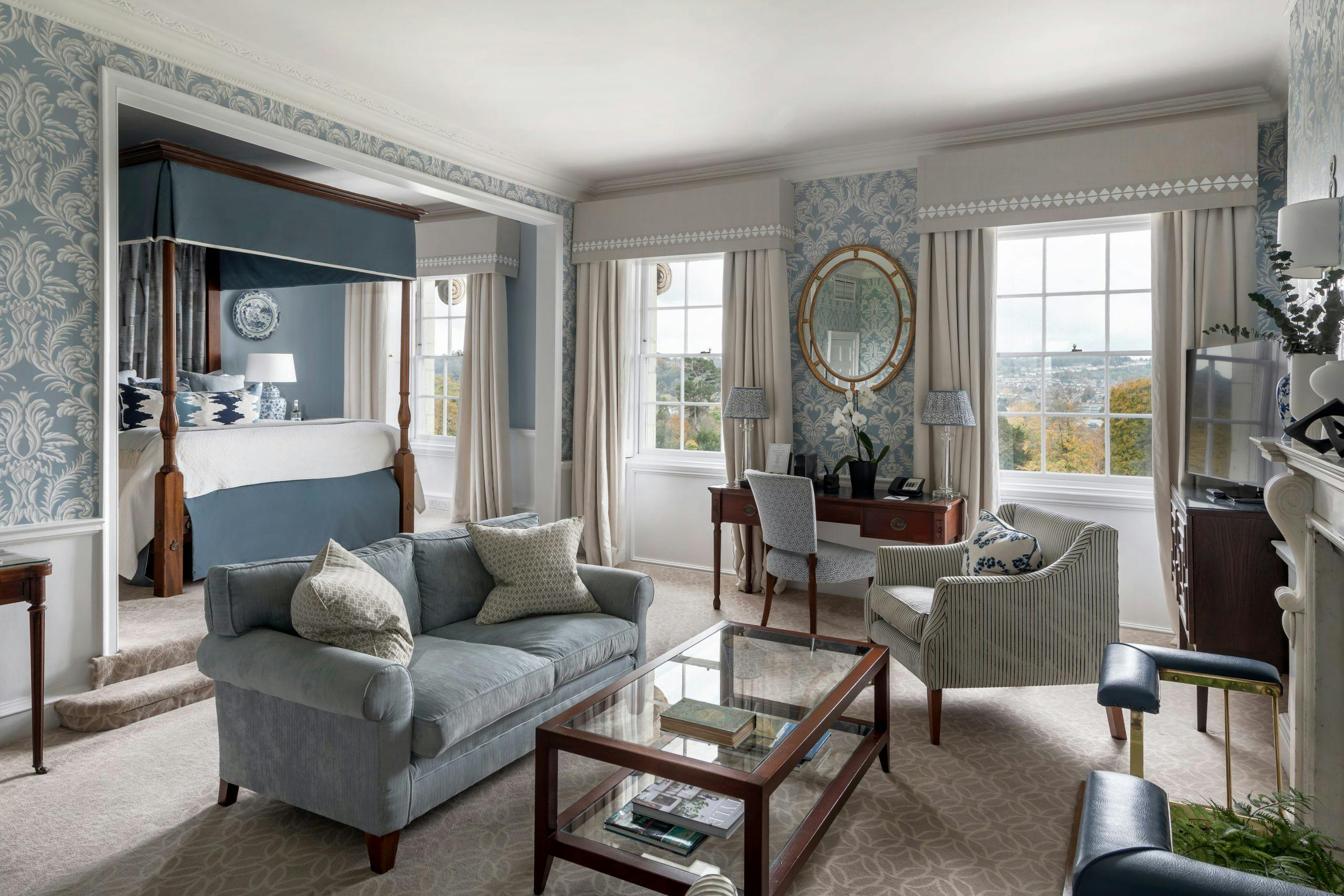
Just a few years after British forces surrendered to the Americans in 1782, George III’s favourite son, the Duke of York (yes, the one who marched up hills and down again) was so charmed by the city of Bath that he splashed out £5,000 on a house in the newly created Royal Crescent. These days, it’s part of the Royal Crescent Hotel, and the Duke’s namesake suite is suitably stately: chandelier, ornate plasterwork, and four-poster.
But the real star of the crescent isn’t the royalty who moved in, but the architect responsible for the grand sweep of buildings – not to mention the Hot Bath, the Assembly Rooms and the nearby Circus the latter built to plans drawn up by his father. John Wood the Younger naturally has a suite named after him, and from its four-poster, tucked into an alcove, you can drink it all in — Georgian ambition, architectural vision and, should you wish, a decent glass of fizz.
Elsewhere in the hotel, the Elizabeth Montagu suite is named after the bluestocking socialite and brains behind one of Georgian Britain’s most influential intellectual salons. A former inhabitant of No 16 on the crescent (now part of the hotel), she was also a cousin by marriage to Lady Mary Wortley Montagu, whose own writing caused a scandal or two and who briefly lived further in York’s Middlethorpe Hall.
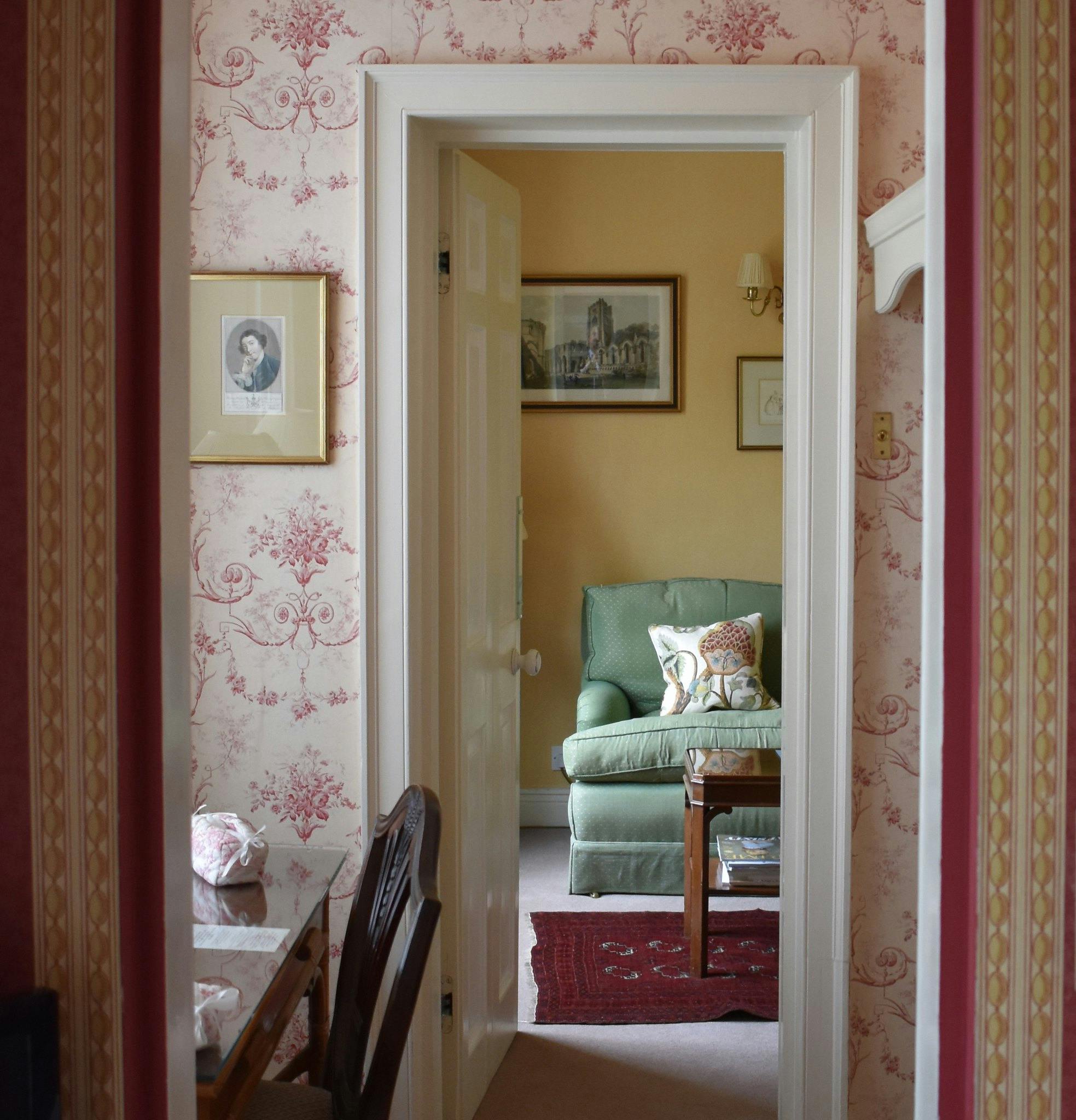
These days it’s a National Trust property, all manicured gardens and sash windows, but you can still imagine Lady Mary sitting at the window seat in her namesake suite, gazing out over the beech avenue before scribbling down something delightfully barbed at the writing desk. Her verdict on the place? “’Tis a very pretty house.” That still holds. There couldn’t be a better place to read Sean Lusk’s book, a Woman of Opinion, which tells the tale of this irrepressible heroine.
But not every historic room comes with a plaque and a protagonist. At Ellenborough Park, a handsome 15th-century manor-turned-hotel in the Cotswolds, the tales are more whispered than written. One long-standing legend involves a lady of the house, a secret tunnel leading from the gazebo to the fireplace, and a regular flow of discreet evening visitors. The tunnel’s now blocked up but the Istabraq Suite still stirs the imagination with its four-poster bed, all-over oak panelling and another hidden door, this one leading (rather more innocently) down to breakfast.
The room might not come with a royal ghost or a crown connection, but like its fellow historic havens, it has a story that will stay with you long after checkout.
Ready to check into history yourself?
Discover Now & Then for more hotels where every room has a story worth sleeping in.
Related Content
More Stories
British Travel
10 Family Road Trips Across the UK for Scenic, Easy Adventure
20 March 2026
A guide to 10 UK family road trips with beaches, castles, wildlife and easy walks, plus hotels that make every stage of the trip feel effortless.
Now & Then
Vintage Wheels
19 March 2026
The experts at three PoB hotels share the classic car experiences to discover and the best local drives for a memorable spin.
British Travel
The Easter Edit: Where to Spend the Long Weekend
18 March 2026
Discover four very different styles for the Easter long weekend, spanning culture-led London, breezy Devon escapes, spa stays in the South East and Scotland at its most dramatic.